Showing posts with label Kids. Show all posts

Physical Activity May Help Kids' Grades, Too


Physical Activity May Help Kids' Grades, Too - While physical activity is known to improve children's physical fitness and lower their risk of obesity, new research suggests it may also help them perform better in school.

Dutch researchers reviewed 14 previous studies from different parts of the world that looked at the relationship between physical activity and academic performance. Their review is published in the journal Archives of Pediatrics and Adolescent Medicine.

The data from the studies "suggests there is a significant positive relationship between physical activity and academic performance," wrote the authors, led by Amika Singh of the Vrije Universiteit University Medical Center's EMGO Institute for Health and Care Research in Amsterdam.

While they didn't examine the reasons why the relationship may exist, the authors, citing previous research, said regular physical activity seems to be linked to better brain function. The effect on the brain could be the results of a number of factors, including increased flow of blood and oxygen to the brain as well as higher levels of chemicals that help improve mood.


http://l.yimg.com/bt/api/res/1.2/1MnrabNQOfZTmOOHMWqn6A--/YXBwaWQ9eW5ld3M7Zmk9aW5zZXQ7aD0yODg7cT04NTt3PTUxMg--/http://media.zenfs.com/en_us/gma/us.abcnews.gma.com/gty_school_gym_pe_nt_111208_wmain.jpg
Florida Lawmaker Proposes Bill to Eliminate Middle School Physical Education Requirement (ABC News)


This latest report comes at a time when schools across the country debate cutting physical education from their curriculum or have already eliminated it because of budget constraints, the desire to stress academics or a combination of both. There is also concern that physical activity in schools can be detrimental to academic performance.

But in addition to the latest research review, a 2010 literature review done by the Centers for Disease Control and Prevention found that out of 50 studies, more than half showed a positive association between school-based physical activity -- such as physical education, recess and extracurricular sports -- and academic performance and about half found no effect. Only a few showed a negative relationship that could be attributable to chance.

Some of the research reported that concentration, memory, self-esteem and verbal skills were among the improvements noted in students who participated in school-based physical activity.

"School boards, school administrators and principals can feel confident that maintaining or increasing time dedicated for physical activity during the school day will not have a negative impact on academic performance, and it may positively impact students' academic performance," the CDC's authors wrote.

Schools Focus on Test Scores, Not Activity

One of the reasons the Dutch authors decided to conduct their research review was concern over schools' emphasis on test scores.

"There is a focus on test scores and academic accomplishments, and there's a belief that schools need to cram all available time into academics," said Dr. David Geier, director of sports medicine at the Medical University of South Carolina in Charleston.

Geier was not involved in the Dutch research.

"The other problem," Geier said, "is that it becomes a funding issue for many schools."

If intellectual activities are incorporated with physical activities, Geier said, children will benefit both ways.

Geier's colleagues at the Medical University of South Carolina and a group of educators recently tried that combination at an elementary school. They incorporated 40 minutes of physical education every day that included a learning component for different grade levels. As an example, young children rode scooters while tracing shapes at the same time.

When the students took their spring standardized tests, more children achieved their score goal after the new physical education program than before it was implemented.

But even if there are no academic gains, physical activity in schools is still very important.

"There are cardiovascular benefits as well as decreased obesity and a decline in juvenile diabetes," said Geier.

"There's an even greater need for physical education now, because the vast majority of children's leisure activities are sedentary and involve technology," said Keith Ayoob, associate professor of pediatrics at the Albert Einstein College of Medicine in the Bronx, N.Y. "The problem is our bodies were not designed with technology in mind. They were designed for physical activity, and both children and adults should use this ability or we risk losing it."

While they reported an overall positive association between activity and academics, the Dutch authors stressed their conclusion was "cautious" because very few studies they analyzed were scientifically strong.

"Only 2 of 14 studies were rated as being of high methodological quality, which is the minimum number of studies needed for 'strong evidence,'" they wrote.

The studies also measured physical activity and academic achievement differently, and physical activity information often relied on self-reporting, which can be unreliable.

Because of the limitations of the prior research, the authors said more "high-quality" research is needed to accurately measure the relationship between physical activity and school performance.

"To gain insight into the dose-response relationship between physical activity and academic performance, we need more high-quality studies using objective measures of physical activity," they wrote. ( Good Morning America )

READ MORE - Physical Activity May Help Kids' Grades, Too

A Mother's Love May Keep the Doctor Away


A Mother's Love May Keep the Doctor Away - An extra dose of motherly nurturing insulates children from lifelong health problems associated with poverty, a new study says.

The study found that people whose parents did not finish high school were 1.4 times more likely to develop a condition called metabolic syndrome by middle age than children raised by college-educated parents. Metabolic syndrome is a precursor to diabetes and heart disease.

However, among people from less-educated households, those who said they had a very nurturing mother were less likely to develop metabolic syndrome, according to the study published Friday (Sept. 23) in the journal Psychological Science. A nurturing mother in a more educated household had no effect on the likelihood that her adult children had developed metabolic syndrome.

Parents' education can be a more reliable indicator of a child's home life than family income, said Lisa Berkman, director of the Harvard Center for Population and Development Studies. Families may fall into low income because of unlucky circumstances such as illness, but still have some of the protective benefits education seems to bring to households.

Researchers "often look at education, because it makes a stronger case," said Berkman, who was not involved with the new study.

Low income and lack of education are often tied to poor health, but the study suggests that the connections between socioeconomic status and chronic health conditions are not as clear as the effects of genetics and lifestyle, the researchers said.

Still, it was striking to see a disadvantaged childhood could manifest in physical disease, said Margie Lachman, a co-author of the new study.

"It [childhood experience] shows up under the skin and in the body as an important risk factor," said Lachman, who is the director of the Lifespan Initiative on Healthy Aging at Brandeis University.


data:image/jpg;base64,/9j/4AAQSkZJRgABAQAAAQABAAD/2wBDAAkGBwgHBgkIBwgKCgkLDRYPDQwMDRsUFRAWIB0iIiAdHx8kKDQsJCYxJx8fLT0tMTU3Ojo6Iys/RD84QzQ5Ojf/2wBDAQoKCg0MDRoPDxo3JR8lNzc3Nzc3Nzc3Nzc3Nzc3Nzc3Nzc3Nzc3Nzc3Nzc3Nzc3Nzc3Nzc3Nzc3Nzc3Nzc3Nzf/wAARCAB7ANQDASIAAhEBAxEB/8QAHAAAAQUBAQEAAAAAAAAAAAAABAACAwUGAQcI/8QAPBAAAgEDAgQEBAUCBQIHAAAAAQIDAAQRBSESEzFBBiJRYRRxgZEHMkKhsVLBFSOC0fEkkiUzNUNyouH/xAAaAQEAAwEBAQAAAAAAAAAAAAAAAQIDBAUG/8QAJREAAgICAgICAwADAAAAAAAAAAECEQMhBBIxQQUTIlFhMoGh/9oADAMBAAIRAxEAPwD1dZwOtcMue2K4sZ6kUmBJ/Kakod5hriks3SuHI2wacpK70ICEX1pzb0OJTnvXeYagtZMMd64cGoixNdGcUIJVQGpAqgUPxEV0OTQnRISKaTUe5NP6CgsQWnrDmmB9+lNvLsW9lNNjHAhOTSyYx7SSRCdTsElMTSgMDgnBxmjY2imGY3Vh7GvNRLxniLZ3zljVrp18ylVDsHHTaoTTPbzfEqMbi9m2MQqu1nVLDRLM3eo3CwxdBncsfQDqT7Co7PW43wl06BvUMD968U/EzXpdR8YXUQm44LMiGBQNk2HEc+pP8D0qbR5GTDPG/wAkX2qfiLq97dsNKVLO1B8okjDSH5knA+QH1NHaL4+1OCdU1UrcQuQOJUCsPtsa810+USTqpbOeue1X9qvA5kcl+HcLgYFGyqS9nuVnfxXkavA6sGAIAO+KnLkV4hpeuT6TqsFzzuGISAOO3Aeo+xyPlXt64ZQQNjRP9lZKhhkNN4x6YqQpv0NIxH0qSpAXpvHvU/JzTktixxQkH4/elRnwPtSoCQQkUlj824/aiGO9IH2qCaBjGCeldW3HoKJ69hXRigoD5QDHI/anGAelFYB610AUFAfw/t+1OFv7UXgUsUFAjW/tTRBjtRuBS4R6UFAyW470mtwfSicUtqCgYQKO1VviSEtoV4FG/Lz09CDV3tQupQmewuIVxxSRsoz64qH4NMTUckZf08hWXlJxEB3LcKLn8zGtdo2kWroJL9muJevC2yD/AEjb71jkXN5bRyDASdlcejY2/vW3jsLt0B5qJAvm4gxDfLH965U3Z9D8nll2ST0VP4keHrS+0LOmWkEV7FKjRmPCtjOD09iftWf03wp4f1qwWNWc3ka4kmEjZduh4t+oOxB32rezPp9vDJdvcM6CMk5IKqQN9/8A9qOCwshDJqFrbpHNcps4GCc9zU7PK7Nw6s81vPAj2nMS2VpJn8qOBhIl/wB6oNattS0KMyZJgBEYcr+bI/3r1Oyn1a1v2tb+2mniLeSRI8rw/wAigPxK06afQgltFzX5gPCB0FSptMzljTVI8aS+urp+XvI74jRBtxNsAPr0r6xtLcx2kCSbukSqx9SBXh34d+BLhvFlnNqKIbe1QXMijcF/0Kfr5v8ATXvfzroTtWc0ouLpjBGB2Fd5a+gp3UUhUlSPlDPQV0IFOwqSuUB3FKlSoAYtvXScEV3hAauSFUXiahBKuMV2gfj4lGxzUT6kSfKKCyzxXQKq479y2CKIS7J60FhtKhDOx6VIjSY3FCSelUYLdxSZiKAkrmKYr5p4NAKqjxVO0Gh3BjcpIwCgg77kZ/bNXFYrx7dhZbW2WXDcJcpnrvgH+ahukdXCxfbnjExN9FPzeZAoJJzucb9jn1q5sPEkptmh1FZLchSC6YKketVi3QD8LYXO2SOlSFZZE4DBHIh28pGPsa5uqbtH1mfDHLGpr/YPquuRX95Y6XYmSSGaTFzPLHwDhwcKoPYnG/StIkd9aJwK0jxcAAUvgffesvPpbfCSZgYrG3lEeMqu+643222H09KqZdS8VseVYvNe2ij86qOIex96r1lZ52bjRhG4O0enWmtiOAi74Y+Bcu7NsAPesxqvjKIT3CGxklAUGENsJAe522FTeDfDovrMT67M010ZFka2fdYwOg9Ou5pvj3TYzrdjNG/LzG3FyyVPlwB07b/tUfl7OfBixSzfXTst/D2ryyQpLKgiLKpxjHD7f2raWN8lyoGQHx968ssLmS1UR3FyJVP5dvMR746itVoN1I17D5cLnHvXRjlaotzuEqcl6NqBXa5mlkVqeAdpVzIrhagHUqaGFKgIuMY360HdrJMnChwPWkzSZyacJMLvUkAS6bIf1VINNI6saKSVe7VMsiHq1KFAIsCO5qVLUgjJP3qd5YwfzU3nR/1fvUAfHGE61OHxQZlQnZqcJU7tQBXGK4SGFQCWI/rNIyR9noSTKAvenBxUKFW6OKTgL1NAEcQNZrXHtZL4M8EE6qOW7sAeW2eh9M561ZanqEem2TXDBnwQqoOpJOB9N6wFvqS2us3VxdOixXBIfO43PVh3FZ5XSPQ4XFnkUskfSJdU8MszPNpM3OGTm3lOGX2B7/WqBZp7KZkcEMpwVb+DW9gFuIxIBkAZTDjI/wDi3ce1U/iC1iv4jICBMOjHqa593ryepxvknD8M21+/aKe1vmuGdZAB5GGBnbP/ABR9iStqQTguT16n51j474JOP8wxODjDbH6etF3WvraQNIweUKpPCnt7mtOzg6mtnptYssO+N3E2NtdNYsJVKl+Ejc7Gsjq+pSXmpNzJjIAAWcHbffA9qppddnvUliXhjjJG4PXv1pliBLKqZHAxwSOw/wCKzyT7EYMcIz7rbNBp80ZfnLHxZxwljsB7Ctj4ZuY5LuMZQMTnABB/frWas7OBSkXABgcQ9q0ugQrDexFsFc/Y5q+KzHnSjLG17NsQw6NUJkYVPwIern700wqTs9dR8eRc9xThcE9aTW2ejVC9vIOh2oCf4k0qFMEtKgC5oyBkDNQ8p5BstHNk7UlUAb0sFcbeUDHCKekDDckLR5UGmGBD+YZqAASQAnJcU0Qx+tWBtou611beJei0AAIYh13roSH0NH8mP+kUuVGP0igADFGRscUhFH3aj1VOwH2p3Cv9I+1AV5VARwtUnCGO5NGcKjoB9qpPEmqJYokLypCsqnLk7/ID1qUm/BKSb2Uvii6aWXlKMwxdMdS9ZKdVIbj8voDWsg0+6nAlSEyRNg4deE4+tV+qxGGQ8zRpGUDIK5XiPptVXicvZ7fH+Sw8WKgk2v2jMLcXNkrCxnCKdyjeZT747H5ULNrZbK3csCEnBRQcEevXarNI/ibkobS8sxjANwvkPyb19sVWa5o0VpMHu4pZIM5YwqpJH1IFVxY54Z9qsvzOTwuZjpPq37oJspIZHWTAcAeUk8Rx8/T51ZzWFhqMLBuFGYYLDvkY6Vk5YZbJ42iuA1uV4mJBBA9D71d6bf7q5Vgc98Y9veqZczyTcpHbw+PDDhWLHpr/AKZvVfDl74fRnZ+Za8W06H16Bh2/iu+F0PxjhRiMLk79Ce9eg218k3kkiQqRg53BqK60nTikktrbxwSEZ8mysfcD/mqOCe0TBPHNKXghtkYzcp3wAOFGH3I29hVrbFoTCWkH5uLiUdcD/eqvTlV4mjkLKY2znuvv7j3qe74RcLxysyonCyAbA7kk/f8AarrSJzLvKjfwtz4lkRsg9h2NTIjLvuapfBUzyx3nE4ZeblMdhgVp8Ctkz5fkYvqyuAEwlG4G1OIcxZyc0XilgelDErsv/VSo4xITnFKpsElcKg9a7SqAcAxXaVKgFSpUqAVKlSoBUqVKgOHpXnH4gwSWviTTdYuQ8llb+UkjyxFtgenqK9HPSsh4vu47iRrRsMkYwykbFiP9v5q0FbohutoMsNSE8aFGyMCnXd00jBbdozKPzwTeXjHqD61gdN1RtPuPgGwY28sJY4/0k/xWhjvjOeTbOr3CHDWl2cE+6uen9/UVzSTi6OqPWS7B93YWN+gjuLSaJt8CTbcf0sCc1jrzw/Lc6qmmRaksx4BIrbgpGTg8Q7j0Na60uA8whZ7ywcjDQTqGQ/Xf9iRVQLuOx8dzwMArPZRlTjGQHbP8iuvDJtbObNFRei3tPBuirbJDdQG8wuC0zHDfQHFVuq+CNImB/wAKT4CQdGhPl+q9K0I1HiiYR448HAJrPSeIZFk4LqzniZWI40AcD5gHcYxUxxr9Fnyct32Zkb+21fRJkGpIHgDcK3ESnh37sP07/T3omDWlKJk46bE7Vp7zW3xw3EJa3YZEgjYrw7fmyNuv7Vmbzw3He3Cz6TMkMbkl0xkDPcDP7Vlk40vMD1+J8wv8M6v+hvxCLidSAV8wJ9OLBB9iDXFiS6llkjniYk5YxnOM+uKsoPDduNMa1lupOfJtzgq4HfHCcjHz/wCMxqMWseH7iD4jlzWLnh59vDwAH0Zd8ffFZ/XNLaOzH8jx5TcYumek+CoVgiljUDCqOgxWprKeCJ45YpuUeIPh8itXV14PF5zvPJipUqVScgqVKlQCpVBcXcECFpHAHTA3JqCDVbWWHmczg9Q+xBoA6lQ0d9bSMVSZCR7043duATzkwOu/SgJ6VBz6pZQBjJOnlxkDc/tXf8QtiARKCCM9KALpVVtrdujEypIsY/XjIPvtUq6vZvw8EwYnsBQUw+lQZ1SyHDmcebpsa4dTtuMKrFsnGVGwoAysN+I0TQS2l2o8j5jfHqNx/f7VpptXVHRYoWcMcEkgAULqV3aX9pLaX1oWifYgn7EHsc96lOnYas8S1uZpFbgOT3wd/Yii9D1o6vLHY3kUnx0KFo7iM7yKuMhvfH8VN4v8O3Gk/wDU27i5sjnzdGj9M+vzoXwLZJLfXOoOrMYF4I/Lkhz/ACQP5q7qZCbiem6E1wUSKW6e4iO4DjcfU71l/wAUmk03UNL1K3ThILqT1LbA4/Y1qNNS95gaW7dVAGEVFUt9hms7+K6cVlpwkbztKxCk/pxv+5FWap6KJt+SHTPEEV1Ctwj7MPMud1PpU91NDcSCUctkb84ZCce+1ecWpl09ZLuNxwIdw3Rvb3q5trw39sLnTCZcfngP50+ncfKrKWyWj0fT52gjCmaExEbBWYj7Enaq7V7Uaf8A+K6VhYlObiBegH9S+g9R0/esxoviJom5Ujnhz0b9J+tbCwvLWfyu6njBUoxJ4ge3TFXRRoltNVivIEkzwn8rdqcb1SzxScLo3VWHDn69vtWOv+b4f1D4dm4reTLQue49PmKf/iRcBuLI7ZO9Xoqeh+F1ZLiV+egt1Xg5bDzBs5/MOox7Z3q+l1O0jYKZgWPQKM1idHeRbEM3GOc3ESMHbsasLi7jgXM0oLbcMasMnO2a48srmzeEdGoXULYkgSdPaoptXtYseYuT2UdKyjrNJJxxzhJVGeBm2PuTTIJLiIPJdzQgHBcZ/J9apZfqad/EOnocPKQfThpVkrqG/knZrSa3MJ6ZGf70qWT1JJ7uVrhJ4eN49uKNVPET7V0tFdsJOZ1yBljkN03Ws9bSNeSRfFYkCnyggYHWrWziRAeFf/cXYnPc1UmgiN7Wx5NvPyVmuHHLAYgSHrge+KcPipJXliKBAGQKz8JJHb3qK8gj+NUBcCRGkYKSMsNgdu9dn2jhXJIByMnOPvSxRMFECwTzBYpJsI7OwBU9d996meWaIkvMshKHZFIDfMnpQV9K8elvwsd4znO/QE96qtL1W9k1Kxikm4o3hQMpRcHI37UsUXk13Bd28RMHM4jtl8DHfoO370+1too0eNUVpOpQYyq79xT9RRZr1YpN0UjABx29RXY7aH4PjKAtjqTnpSyQGINDx8dymEbyCOA9PcHrU6a1DwsJrm14ckqGBQqPTc1IEW7gU3Ch92Hp39q5PZ2rNbBreJgMkcSA4396EDklsbmBmeePiAHlD5+RFSTQNIIHdpw0THzROBxj3x2rOzzyDUpJA3nRWjVsDKrjoDWiVRJNJxknyRnqR3qPIoitmiu+ZFbxRLC5aOaKZeJWz6Y23/vVRYaNBocT2sEjnmTtKSc8Sk48ufQAAVorWGK5eRZ41cDzAEdwTg1XyjivpFbJHGRjPtW2LyZZdIstFvLVLeWedGUIGaSV9hgbkmvO/FmqtrmqvdbrCMR26FccK/L1Nb++ULpF0qjA+Hc//U151BFGFTyjrWyWzNukVXiOCO30F5JQeqqmPUnasnpt29tLzYHYcP5ipxj3rY+Of/SIV7c0bfQ1UeH1WKzjljAV2vbdSR3HOTas3qRovBZxajDexrJfW0d2CP8Azojy5f8AuGxPzzR9vrNjbqoh1S6hZe1zb8Z/7kH9hVz+ItnbWWpWRtIEhLq4bljGQCuP5NY/UFUAkAZrSEm0VlFGtvtS0PVtM+FutQWRv0mCM8wHPVeL027ftUMOh897ZdPguhHjAF64/wA47n8y/l2z2+VVHhS2hluYeZGrcZ82e9eiOoijkWPyiMHgA7YFaT1FlIrYoYYo5ti8UgUI0crcSDO4APT7UBcouocVwIy7KPMuSMAd8UVowF/MFvBzQIg4DdmG4NNEj8q7cnLRTgIT+kEjNcFnWCTTyQapEIZBHCsf+ZC7YJJ38pPf2qGREurx45nYGU4RGQ5IG+/r9atNWwl5bhVQccoDHhGT9aNiRIbcSRqquZChYDcqAcCgA7U2kMKxvKoYdVkJyM746e9KgZ7qeC5lihlZUUjCg7DyilQWf//Z


Education is not the whole story

A team of researchers mined data from a subset of 1,200 participants in the decade-long National Survey of Midlife Development in the United States (MIDUS) looking for correlations between socioeconomic status as a child and the risk of metabolic syndrome as an adult. The adult participants filled out questionnaires about their parents' behaviors, and researchers checked their blood pressure, blood sugar, stomach fat and other signs of metabolic syndrome.

Previous results from MIDUS showed adults' education levels influence their risk for disability, memory and cognitive reasoning problems, said Lachman, one of the principle investigators on the MIDUS study.

"But not everybody who has low education does poorly in these areas," Lachman said.

The study showed that parents' education level was not the single determining factor in children's health: half of children in the least-educated households grew up to develop metabolic syndrome by middle age, but 31 percent of children from college-educated households developed metabolic syndrome, too.

And adults from a disadvantaged household who went on to earn higher degrees were still more likely to develop metabolic syndrome than those raised in more-educated households.

Nurturing, the results implied, could be one difference that explains why some people go on to live healthy lives despite their circumstances, and others don't.

The researchers measured parental nurturing with survey questions such as "How much did she/he understand your problems and worries?" or "How much time and attention did she/he give you when you needed it?"

The researchers said that this type of study cannot prove why or how a nurturing mother protects her children's health over the long term. Yet previous studies have shown "nurturant caregivers imbue children with the sense that the world is a safe place and others can be trusted," the authors from the University of British Columbia and the University of California Los Angeles wrote in the discussion.

"These beliefs may enable disadvantaged youngsters to read less threat into their social worlds, with a consequent reduction in the wear-and-tear such vigilance can place on bodily systems," they wrote.

Fathers' nurturing was found not to have an effect in the study, and authors hypothesized that either mothers have a unique contribution to children's health, or that gender roles during the participants' childhood after World War II could have influenced the results.

A 'constant test' for moms

Studies have found good social ties and stable income lead to better health, Berkman said.

"When you have neither of them you are at double jeopardy," she said.

And while improving education and socioeconomic status would likely help children grow up to be healthier adults, Berkman said there are also policy changes to family leave laws and flexible work schedules that could give families the opportunity to be more nurturing at home.

"Mothers in almost all cases try really hard. We live in a country where it's a constant test, and it's more of a constant test for those who have the least resources," Berkman said.

Pass it on: Moms who provide extra nurturing and comfort may also be giving their kids lifelong protection against chronic disease. (

READ MORE - A Mother's Love May Keep the Doctor Away

Pregnancy Myths -- Busted!


Pregnancy Myths -- Busted!. Do this. Don't do that. With all the pregnancy advice out there, it's hard to know what to believe -- or whom to believe. But remember, every pregnancy is different, so follow your doctor's orders above all else.


Myth 1: Eat Three Healthy Meals a Day

False! You should be eating six or seven small meals every two to three hours. "Eating frequently and from various food groups will keep your blood sugar in a constant range, which is healthy for you and your baby," says Stuart Fischbein, MD, coauthor of Fearless Pregnancy.

Myth 2: You Can Drink Alcohol

True! If you want to toast your sister at her wedding with a glass of bubbly, "go ahead," says Mary Jane Minkin, MD, a clinical professor of obstetrics and gynecology at Yale University School of Medicine and coauthor of A Woman's Guide to Sexual Health. "One glass of wine isn't going to hurt the baby," she says. But one glass here and there doesn't mean nine -- in fact, two or more alcoholic drinks daily can lead to fetal alcohol syndrome. So while it's best to cut out alcohol completely, Dr. Minkin says that an occasional small glass of wine with your pasta primavera is harmless.

Myth 3: Decaf Only

False! One small cup of coffee a day is perfectly fine. While a recent study at McGill University in Montreal did find that the caffeine in two to three cups of coffee a day increases the risk of miscarriage, it didn't consider how the coffee was brewed and the type of coffee used. Dr. Minkin points out that a French blend served black is much stronger than a weak cup of American coffee mixed with milk. It's another controversial subject for sure, but moderate caffeine intake isn't likely to harm you or your baby. The same goes for sodas with a caffeine jolt.

Myth 4: Cut out the Cheese

True! Well, you don't have to ban all cheeses. Some kinds, like cheddar and Swiss, are innocuous because they've been pasteurized. It's the soft, unpasteurized products like Brie, feta, and goat cheese that might carry food-borne illnesses. If you're lucky, the market you frequent will carry pasteurized versions -- just start looking at labels more often. And then you can still enjoy your crackers with cheese.

Myth 5: You're Eating for Two

False! Pregnancy isn't a time to pig out. You certainly have a bit more leeway when it comes to a second helping of supper, but on average, women need only about 300 extra calories a day.

Myth 6: Say So Long to Seafood

False! Chances are that if the reputable (and tasty) sushi bar you love so much hasn't made you sick pre-pregnancy, you're not at risk when with child. Yes, there's a greater risk of ingesting bad kinds of bacteria from raw foods (so you might feel more comfortable with a cooked-shrimp roll), but if you had spicy yellowfin tuna before realizing you were pregnant, no harm done. The dangerous mercury levels, you ask? Again, it's all about moderation. Enjoy tuna on rye once a week, not daily.

Myth 7: You'll Have to Suffer Through Sickness

False! Many OTC meds are safe during pregnancy, but somehow women believe they need to put up with migraines and be a slave to the runs. Not so. You should consult your ob-gyn before you take anything, but many experts give the following drugs the green light: Tylenol for headaches and fever; Tums or Mylanta for heartburn; Imodium for diarrhea; Robitussin for colds; and Sudafed or Benadryl for allergies. Many prescription drugs are also okay to continue with during pregnancy, but again, follow your doctor's orders.

Myth 8: They'll Know You're Not a Natural Blond!

False! Being pregnant doesn't have to compromise your appearance (at least not above the belly), but you do need to be smart. Dr. Fischbein says that while there's a theoretical risk associated with coloring your hair (chemicals being absorbed through the scalp), studies haven't shown anything conclusive. He recommends avoiding dye for at least the first trimester, when the baby's organs are forming.

Myth 9: Manicures Are Out

False! You don't need to forgo weekly manis just because you want to be a mommy. "You would need massive and long-term exposure to the products before there was a chance of problems," says Dr. Fischbein. You might get a little nauseous from the fumes with your newfound sensitivity to odors, but if that's the case, make your appointments for less crowded times of the day. (thenest.com )


READ MORE - Pregnancy Myths -- Busted!

Buying Time for Gender-Confused Kids


Buying Time for Gender-Confused Kids. Misunderstood Procedure Delays Puberty in Children. A procedure that some are mistakenly calling a sex change treatment for children has been drawn into the spotlight in recent days -- although it has been going on for many years.

Gender

A treatment to delay the onset of puberty in gender-confused kids is garnering media attention.
(ABC News Photo Illustration)

In an interview with National Public Radio broadcast earlier this month, Dr. Norman Spack, a pediatric endocrinologist at Children's Hospital in Boston, revealed that he has at least 10 pediatric transgendered patients to whom he has been giving a hormone-blocking treatment to delay puberty.

Citing recent unwanted media attention, Spack declined, through a spokesman, to be interviewed for this article.

But other doctors say that while Spack may be the first to go public about what he is doing, he is not the first to help children delay their puberty so they can reach maturity before deciding if they would like to transition to the opposite sex..

Milton Diamond, a sexual development researcher and the director of the Pacific Center for Sex and Society at the University of Hawaii, says he knows of doctors who have done this before, "but people don't generally advertise it," he says.

He pointed to the Netherlands, where hormone-blocking therapy has been administered to transgendered youths for more than 20 years.

But Diamond says that the hormone-blocking therapy itself is not sex reassignment.

"It's a delaying tactic to allow the individual to come to terms with the direction he or she wants to go," he says. "What you're doing is allowing the individual more time to make a decision."

Is It Safe?

Jamie Newton, a spokesman for Children's Hospital, confirmed that the treatments are done in accordance with the Harry Benjamin guidelines (generally accepted clinical guidelines for treating transsexual patients), which call for fully reversible treatments for prepubescent children.

The therapy entails an injection of either luteinizing hormone-releasing hormone (LHRH) or medroxyprogesterone, which block estrogen or testosterone to delay the onset of puberty.

The regimen is typically given to children (mostly girls) who reach puberty very early, when the parents and physician opt to delay the process a few years to aid with normal development.

Medroxyprogesterone is known commercially as Provera, a drug injected once every three months as a birth control medication.

"LHRH has been used for 20 years, medroxyprogesterone probably that long, if not longer, so we know they're safe and effective," says Alan Rogol, a clinical professor of pediatrics at Riley Hospital of the Indiana University School of Medicine and the University of Virginia.

Also, he says, a child will undergo normal puberty following the hormone-blocking treatment, and it is fully reversible should a transgendered child choose not to undergo sex reassignment or transition once they reach adulthood.

"There is no question that it's reversible, and I'm unequivocal about that," says Rogol.

In addition to delaying the onset of puberty, the hormone-blocking process does help patients avoid unwanted bodily features if they do decide to undergo a sex change upon reaching adulthood. It is the changes of puberty that often cause the most distress for transgendered children.

"We're talking about things that have a profound, significant influence on the child's life," says Diamond.

Male transsexuals can avoid going through menstruation, while female patients can avoid growing body hair or developing a deep voice if they begin sex reassignment once their childhood hormone-blocking regimen ends.

Transitions and Follow-Ups

Although the treatment is reversible, Diamond says that most who reach that point will go on to transition.

"Almost all those who have gender identity disorder continue on to surgery, or at least continue on to transitions," says Diamond.

In his interview with NPR, Spack confirmed that assessment.

"My confidence comes partly because I've yet to see one change their mind and partly because we're using the psychological testing methods the Dutch have perfected, and they've yet to see one person change their mind," he says.

While the procedure allows children to more easily undergo sex reassignment upon reaching adulthood, sex reassignment surgery is controversial.

First performed in the first half of the 20th century, sex reassignment surgery gained prominence when former soldier George Jorgenson underwent the operations in Europe and became a media sensation as Christine Jorgenson.

In 1966, the Johns Hopkins Hospital announced that it was performing sex reassignment surgery through its Gender Identity Clinic. Those procedures were halted in 1979, when a study by Dr. Jon Meyer, a follow-up on patients who had undergone the operations, did not show any improvement in their wellbeing.

Dr. Paul McHugh, then the head of the psychiatry department at Hopkins, made the decision to halt the procedures, saying they destroyed healthy organs and that physicians needed to focus on healing transgendered persons' minds, rather than altering their bodies.

Many transgendered persons continue to undergo sex reassignment surgery, although a great number of them do so abroad. Because of a lack of reporting, exact numbers are hard or impossible to come by.

Since Johns Hopkins closed its clinic, no other hospital of that stature has made a public announcement of resuming the surgeries.

How Do You Know?

The closing of the Hopkins clinic led some to question how to tell when someone is truly transgendered, particularly children, who may simply have interests more often associated with the opposite sex.

"That always involves clinical judgment," says Diamond. "How do you know, when you're talking to a friend if he's pulling your leg? The more you know about a person, the more you can judge if he's lying or not. You don't make those decisions on one interview."

The important thing, says Diamond, is to be careful and aware that errors can be made in treatment.

"You have to be a little bit humble and realize you may make a mistake," he says.

But, he says, when used properly, delaying puberty until they are adults may be the best way to help a number of transgendered children grow into successful adults.

"If I thought it was appropriate, I wouldn't have hesitation in doing it," says Diamond. "I think it's a worthwhile practice, but like everything else, it has to be used judiciously." ( abcnews.go.com )


READ MORE - Buying Time for Gender-Confused Kids

Surgery Breakthrough Stretches Girl's Arm


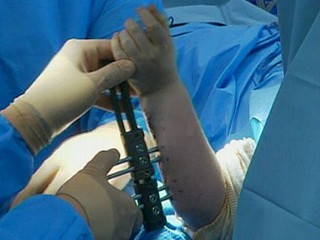
Surgery Breakthrough Stretches Girl's Arm. Bone-Lengthening Makes 9-Year-Old Girl's Dreams Come True. A pioneering new surgery technique is a dream come true for a 9-year-old Arkansas girl with a rare bone disease.

Lauren McCabe was born with a left arm nearly two inches shorter than her right, a condition that has kept her from being able to lead a normal life.

"I can't really ride bikes, I can't really bowl and I can't swim with my arm like that," explained Lauren. Her disease has also had an effect on her self-confidence, like the time she entered her local Miss Strawberry Pageant.

"One time in the Strawberry, I actually had my arm in front so I put it behind my back so nobody could ever notice it."


arm surgery
(ABC News)

Stretching Surgery

Her disability and disfigurement was getting progressively worse every year. "The condition is a condition where instead of growing long and straight, the bones grow bent and short and branches," explained Dr. Aronson, chief of pediatrics at Arkansas Children's Hospital, who is one of the pioneers of the bone surgery that Lauren had.

"What we're doing is a bone lengthening, which means that we have to gently crack a bone so that its blood supply is preserved, stabilize the bone with pins that connect to the outside, a frame, and through that frame we stretch the bone very slowly," said Dr. Aronson. At two and a half hours, the surgery is relatively quick.

The actual process of lengthening the bone though takes months. While Lauren healed, doctors stretched the bone one millimeter a day with a motorized device. As they slowly separate the bone and pull it apart, new bone grows to close the gab, thus lengthening the limb. It's painstakingly slow so it doesn't hurt.

Bright Future

After about five months doctors removed the device and fitted Lauren for a cast. "Good Morning America" met Lauren at the hospital on the special day the cast came off and found her full of excitement for the future.

Before long she was chatting about the confidence she'd have cheerleading. "I'll hold it. I'm gonna wave and everything," says Lauren.

Dr. Aronson says he's happy just knowing there'll be no more physical obstacles in her life. "Her function is most important to me, and that's something a child can't always realize. But it all works together to make a dream for someone, and that's what we try to do." ( abcnews.go.com )


READ MORE - Surgery Breakthrough Stretches Girl's Arm

Social Ladder Forms Early in Life


Social Ladder Forms Early in Life. The Social Pecking Order Starts in Preschool but Isn't Inevitable, Experts Say. Lori Holden, 46, of Denver, Colo., remembered fourth-grade as the year she was forever labeled a "nerd, or a dork, or pick the pejorative of your choice." It was a label that stuck until college.

The Social Pecking Order Starts in Preschool but Isn't Inevitable, Experts Say
Researchers say children form hierarchies of popularity surprisingly early -- and these rankings can stick for a very long time.
(/Getty Images)

At 46, now with a successful life, Holden said she is perfectly fine with her nerdy identity. But after watching her two young children play with others, she took pause.

"It is doing things like telling another child, 'Don't play with that yet, you can't play with that,' and then turning to another child and saying, 'Just you and I will play together,'" Holden said.

"I watch my children with their peers and wonder if I am seeing the early stages of their social-ladder construction," she said.

"I can see this happening at age 4 and 5."

Holden has it right, according to Maurice Elias, professor of psychology at Rutgers University in New Jersey and the author of "Emotionally Intelligent Parenting."

"It is true that it's a natural tendency in kids to form groups and have in-groups and out-groups, and you can see that in very young children," Elias said.

A small group of children in preschool might isolate one child. By fourth-grade, Elias said, children become more sophisticated at creating lasting labels for entire groups.

"But age 4 to 5 is when you really want to start to think about this, in my opinion," he said.

Long-term studies show once children get labeled in a group, clique or ladder on the social rung, that status tends to stick all the way through the high school years, Elias said.

"It may be an impulse, but there's no reason why all children, including children that are a little different, can't play together," he said. "The reason we were given frontal lobes is so that we would modify these sorts of instinctual tendencies."

Elias said researchers have learned the drive to exclude can be molded and controlled by teachers so that no strict mini-caste system or pervasive pecking order rules the school.

Reading, and Writing and ... Social Utopia?

Elias is part of a burgeoning movement to teach empathy and "emotional learning" in schools across the United States. In 2003, Illinois passed the Illinois Children's Mental Health Act to require emotional learning in schools. Similar legislation was passed in New York State in 2006. Some groups estimate that 10 percent of all U.S. schools now use some kind of evidence-based, emotional learning program.

By 2007, governments in Spain and Malaysia adopted programs for emotional learning.

Stemming Social Ladders Internationally

"In Singapore, it's now been standardized as part of the curriculum there," said Mary Utne O'Brien, vice president of strategic initiatives for the non-profit Collaborative for Academic Social and Emotional Learning (CASEL).

"The international community in Singapore said 'our students are technically brilliant here, they always win national science awards, but they aren't creatively solving problems'," said O'Brien, who is also a professor of education and psychology at the University of Illinois at Chicago.

With slipping international rankings in math and science test scores, the United States seems to have the opposite problem.

O'Brien said educators on American soil dealing with behavioral problems were moved to try the emotional learning program.

"It was a bunch of teachers saying these problems get too big for us to handle by the time kids get older," O'Brien said. "We'd be much smarter to give children the emotional tools to start out in school in the first place.

"We don't think of these things as an intelligence, we think of them as skills that can be taught."

As Holden guessed, the social hierarchy does start at a very young age and, as she hoped, there might be something she and the children's teachers can do about it.

"As a parent, you want to work on both ends of it," Holden said. "You don' want them to be a mean person, but you don't want them to be a victim of a mean person."

What Parents and Teachers Can Do About Social Ladders

Elias said some researchers have shown that children do have a natural temperament that might lead them to exclude or be excluded. But these temperaments are like a "factory preset"

"Kids will try on different behavior, their temperament can lead them to start somewhere," Elias said. "Some kids can start out by being shy, some kids can start out by being very directive and bossy."

Teachers Impact the Cliques in a School

Depending on how on how far the behavior gets them, the child might adjust the degree of their natural temperament, Elias said.

"The most powerful factor in that is the environment," said Elias.

Parents and teachers needn't make children play with everyone, but social learning experts say that not tolerating emotionally aggressive behavior in the same way of enforcing a rule of "no hitting" can go a long way. So, too, can encouraging children to recognize similarities in their classmates.

"Even when we see these longitudinal studies that kids retain these attributes over time, but we don't know what the adults did during that time," Elias said.

Since the mid-1990s, groups like CASEL and others have done intensive studies about which social interventions work. Even something in kindergarten as simple as the seminal book "You Can't Say You Can't Play," by Vivian Gussin Paley, can have a lasting effect in students.

But despite the reports of classrooms with happier, more congenial children, researchers like Elias and people at CASEL weren't universally sought after by schools.

Why Care About the Social Ladder Anyway?

"We had parents say, 'In our neighborhood, if you teach my kids this, they're going to be sliced and diced on the street.' This is not the way we live," O'Brien said.

"It is a question as to whether the little lambs from these schools are brought to slaughter later," O'Brien added. "But more it's administrators fearing that this was not the role of the school."

Even in more touchy-feely districts, O'Brien said, many administrators balked at trying to spend money on programs for empathy and emotional learning when the district needed to compete in academic arenas.

That is, until more studies showed a link between the emotional learning programs and higher performance in academics.

O'Brien and her colleagues met Friday with representatives of the U.S. Department of Education in talks about incorporating standards in the federal levels for emotional learning programs.

"They have a profound impact on their behaviors, it affects academic achievement and standardized test scores," O'Brien said. "Once the academic link was established, it really became a point of entree." ( abcnews.go.com )


READ MORE - Social Ladder Forms Early in Life

Sad Dads May Lead to Crying Infants


Sad Dads May Lead to Crying Infants More factors should be considered than depression among moms, experts say. Don't automatically blame mom: A crying, colicky baby can be just as much the result of dad's state of mind, Dutch researchers report.

Other studies have found that depression among mothers can be related to excessive crying or colic, a common problem with newborns, but the researchers said that little was known about whether fathers' emotions and behavior also have an effect.

"Up to now, almost all attention went to the prenatal effects of maternal depression on child development, leading to the development of detection and treatment programs that focused on mental well-being of mothers," said lead researcher Dr. Mijke P. van den Berg, a psychiatrist at the Erasmus Medical Center in Rotterdam.

"This study showed the importance of taking paternal factors and well-being during pregnancy into account, next to maternal," she said.

The report is published in the July issue of Pediatrics.

To see how parental depression was related to excessive crying, van den Berg's team gathered data on symptoms of depression among parents of 4,426 infants who were 2 months old. Excessive crying was defined as crying for more than three hours a day on more than three days in the past week.

Overall, just 2.5 percent of the infants in the study fit the excessive crying criteria. But, the researchers found a 30 percent higher risk for depression among parents whose infant cried excessively.

"This finding could not be attributed to co-existing depressive symptoms of the mother, which is already known to be a risk factor for excessive infant crying," van den Berg said. It could be related to genetics, a depressed father or, indirectly, through factors such as marital, family or economic stress, she said.

In fact, a dad with symptoms of depression was twice as likely to have an infant who cried excessively as was a dad who was not depressed, the study found.

"Fathers do matter, so take care for the mental well-being of fathers during pregnancy," van den Berg said.

Dr. Jon Shaw, a professor and director of child and adolescent psychiatry at the University of Miami Miller of School of Medicine, said that the study shows how depression can lead to infant's excessive crying.

"This study demonstrates in a paradoxical way the importance of fathers, in that fathers' measurable depression during pregnancy is a risk factor for excessive infant crying at 2 months of age," Shaw said.

"This seems to be related perhaps to the enduring effects of fathers' depression on the family ambience, the parental relationship, child parenting and, perhaps as the authors suggest, there may be a genetic factor involved," he said. (HealthDay News)


READ MORE - Sad Dads May Lead to Crying Infants

More Sex May Help Damaged Sperm


More Sex May Help Damaged Sperm. Daily sex could help men with damaged sperm, some doctors say. For men with fertility problems, some doctors are prescribing a very conventional way to have a baby

Photo: Daily sex could help men with damaged sperm, some doctors say
In a study of 118 Australian men with damaged sperm, doctors found that having sex every day for a week significantly reduced the amount of DNA damage in their patients' sperm.
(Getty Images)

In a study of 118 Australian men with damaged sperm, doctors found that having sex every day for a week significantly reduced the amount of DNA damage in their patients' sperm. Previous studies have linked better sperm quality to higher pregnancy rates.

The research was announced Tuesday at a meeting of the European Society of Human Reproduction and Embryology in Amsterdam.

Dr. David Greening of Sydney IVF, a private fertility clinic in Australia, and colleagues looked at 118 men who had damaged sperm. Greening and colleagues told the men to have sex every day for a week. After seven days, the doctors found that in 81 percent of the men, there was a 12 percent decrease in the amount of damaged sperm.

Many fertility experts suggest men abstain from sex before their partners have in-vitro fertilization, to try to elevate their sperm counts.

Sperm quality can also be improved if men don't smoke, drink moderately, exercise, or get more antioxidants.

Since concluding the study, Greening says he now instructs all couples seeking fertility advice to start by having more sex. "Some of the older men look a little concerned," he said. "But the younger ones seem quite happy about it."

Experts think sex helps reduce the DNA damage in sperm by getting it out of the body quickly; if sperm is in the body for too long, it has a higher chance of getting damaged.

Some experts said that while Greening's research is promising, it doesn't prove that daily sex for men with fertility problems will actually produce more babies.

Greening said he and his colleagues are still analyzing the study data to determine how many women got pregnant.

"Looking at sperm DNA is just one part of the puzzle," said Bill Ledger, a professor of obstetrics and gynecology at the University of Sheffield, who was not connected to the research. "Maybe this will improve pregnancy rates, but we still need to do more studies."

Ledger said instructing couples with infertility problems to have more sex could stress their relationship. "This may add even more anxiety and do more harm than good," he said. He said couples shouldn't feel pressured to adjust their sex lives just for the sake of having a baby.

Greening said the study's findings were ultimately very intuitive. "If you want to have a baby, our advice is to do it often." ( abcnews.go.com )


READ MORE - More Sex May Help Damaged Sperm